
Functional medicine practitioners review the structured category output — Vitamins, Medicinal Mushrooms, Gut Health, and Topicals each in their own section — so they can sign off on one category at a time before the handout generates. The structure maps to how clinicians already think about a protocol review.
Clinician reviews
What practitioners say after using the Scribe workflow.
Feedback from functional medicine physicians, chiropractors, and integrative clinics who've moved their supplement protocol workflow into aiVitaPlan Clinical — from intake dictation through clinic-branded patient handout.
Early access
aiVitaPlan Clinical is in early access with a select group of functional medicine, chiropractic, and integrative wellness practitioners.
Practitioners evaluate the full workflow — Scribe intake dictation, protocol category organization, drug-interaction flags, and patient handout generation. Verified practitioner feedback will be published here as clinics complete onboarding.
How clinicians use the workflow
From intake to handout — where the workflow fits clinical practice.
The following use cases reflect how the aiVitaPlan Clinical workflow is designed to fit each step of a practitioner's protocol review. Verified practitioner feedback will be published here as clinics complete onboarding.
Using the Scribe, a practitioner dictates the intake and the patient-context fields populate automatically — conditions, medications, allergies, and lab values like Vitamin D from the most recent draw. By the time Generate is clicked, the patient context is already complete, reducing after-visit documentation time.
When a patient is on an anticoagulant, the CRITICAL INTERACTION CHECK flags a high-dose Omega-3 recommendation before the handout is generated. This surfaces the review step automatically rather than relying on the clinician to remember to check — the same check a careful practitioner would do manually, built into the generation step.
Clinics running nutrition recommendations alongside rehab programming use the Pro+ Combo in a single visit workflow. The patient handout is clinic-branded; the provider PDF retains the full dosage rationale and interaction detail for the clinical record.
When a paper intake form is uploaded via OCR, lab values — Vitamin D, ferritin, and others — auto-extract into the protocol fields next to the recommendations that reference them. The chart data and the protocol remain in the same workflow without manual re-entry.
Patient names and identifying PHI are not stored. The clinic-branded patient handout and the separate provider PDF are the two outputs — the provider version includes full dosage rationale; the patient version is plain-language. The data model was designed for clinical compliance from the start.
By specialty
How different practice types use the protocol workflow.
The same Scribe-to-protocol pipeline adapts to each specialty's intake structure — whether that means entering lab values from a functional panel, uploading an OCR intake form, or cross-referencing a polypharmacy medication list before generating a gut-health or botanicals protocol.
Functional medicine
Practitioners value the structured category output — Vitamins, Gut Health, Medicinal Mushrooms, and Teas each in their own section — and the ability to enter lab values like Vitamin D ng/mL or ferritin directly into the patient input before generating. Interaction checks against complex functional medicine supplement stacks are the most-cited differentiator.
Chiropractic and rehab
The Pro+ Combo pairs supplement protocol generation with the rehab programming tools in the same subscription. Chiropractors treating musculoskeletal conditions alongside nutritional deficiencies — low back pain, fatigue, post-injury recovery — generate both a supplement protocol and a patient handout in a single visit workflow.
Nutrition and dietitian practices
Registered dietitians and CNS practitioners use the Scribe to capture intake conditions and current meds via voice, then generate a protocol that includes Oils, Homeopathy, and Teas alongside core supplements. The patient handout and provider PDF are the primary deliverables — the provider version includes full dosage rationale; the patient version is plain-language and clinic-branded.
Integrative wellness clinics
Integrative clinics often manage patients with IBD, UC, chronic fatigue, or multi-condition presentations. The multi-phase protocol capability — generating a phased plan across an extended care timeline — and the OCR intake form scanner (upload a paper intake → auto-extract into the protocol fields) are the most-used features in this segment.
See the workflow
The protocol output practitioners are describing.
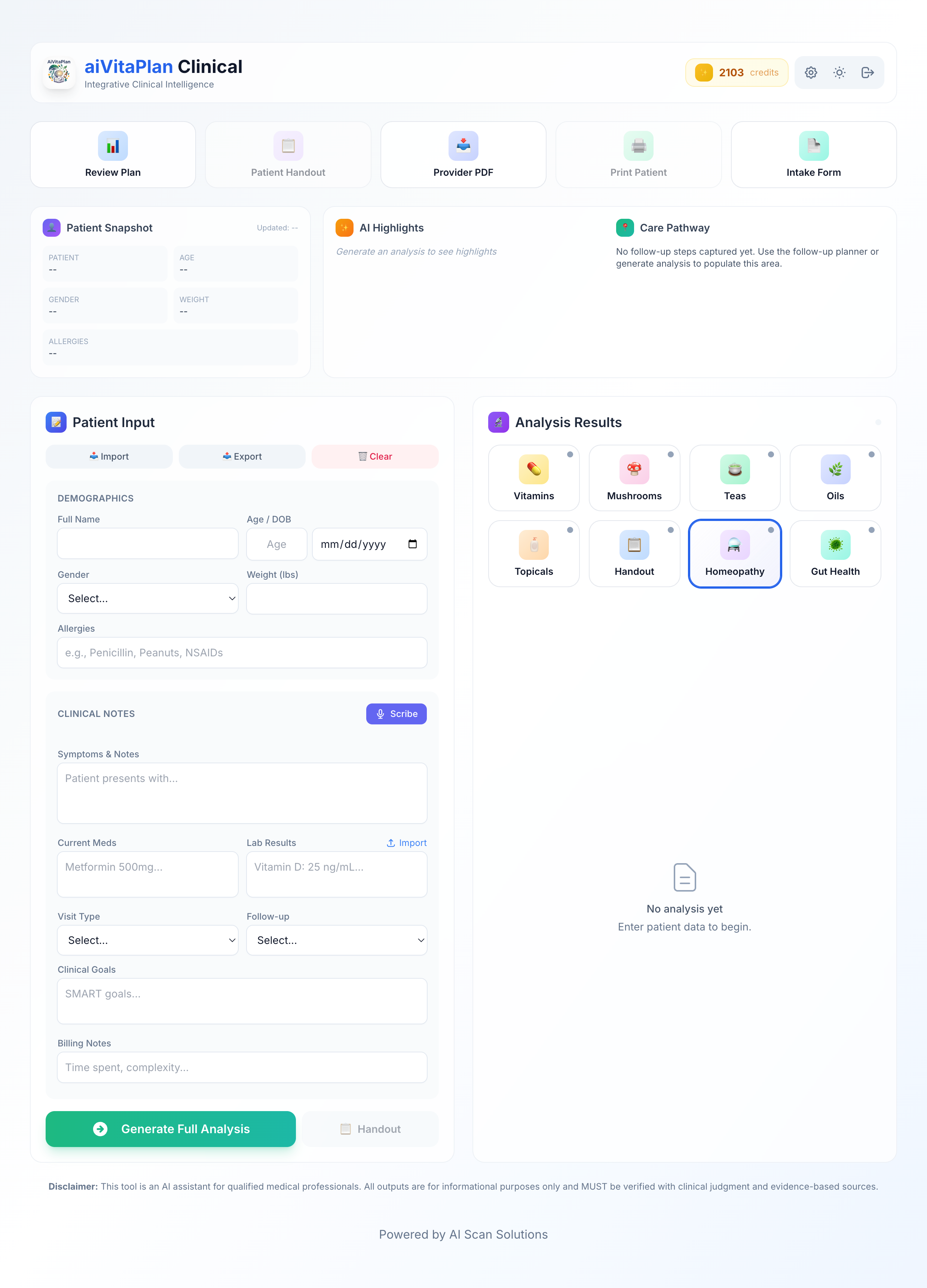
The Analysis Results screen organizes recommendations into labeled categories — Vitamins, Medicinal Mushrooms, Teas, Oils, Topicals, Homeopathy, Gut Health — each with dosage, a rationale tied to the patient's entered conditions, and a CRITICAL INTERACTION CHECK against the current medication list. From there, one click generates the patient handout and provider PDF.
aiVitaPlan — Analysis Results
FAQ
Common questions about aiVitaPlan Clinical.
Does aiVitaPlan Clinical replace clinical judgment?
No. aiVitaPlan is clinical decision-support software. Every generated protocol requires practitioner review before anything is shared with a patient. The CRITICAL INTERACTION CHECK flags potential concerns — the clinician decides how to proceed.
How does the drug-interaction check work?
When you enter the patient's current medications into the Patient Input fields, the AI runs each generated supplement recommendation against that medication list. If a combination carries known risk — for example, high-dose Omega-3 with Klonopin elevating bleeding risk — the recommendation surfaces a CRITICAL INTERACTION flag with a plain-language explanation. The clinician reviews and decides before the handout is generated.
What specialties does the Clinical plan serve?
The core workflow fits any practitioner who generates supplement or nutrition protocols: functional medicine, chiropractic, integrative wellness, registered dietitians, and naturopathic clinics. The Pro+ Combo adds rehab programming tools, which broadens fit for chiropractic and physio practices managing musculoskeletal and nutritional care together.
What patient data is stored?
aiVitaPlan does not store patient names or identifying PHI. Clinical inputs (conditions, meds, lab values, visit type) are used to generate the protocol and are not retained in named patient records. This design reflects HIPAA-aware handling, though clinicians are responsible for their own compliance posture.