
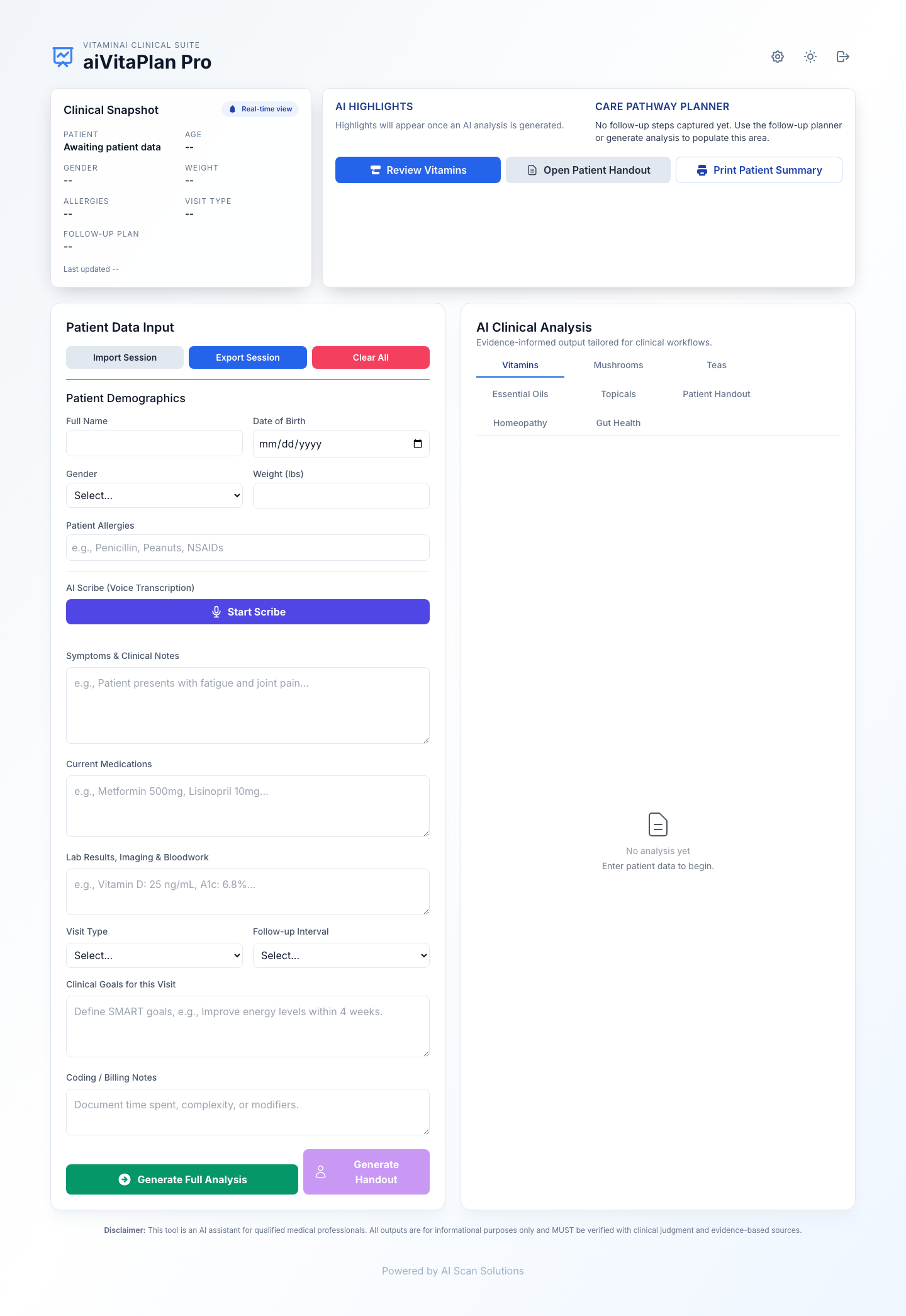
Supplement and nutrition recommendations are rarely simple. A practitioner may be considering patient goals, allergies, current medications, dietary pattern, lab values, visit type, follow-up interval, and the patient's capacity to follow a plan. A generic AI chat answer can miss that working context because it is not designed around the clinical workflow. It may produce a confident paragraph, but it does not automatically create a reviewable care document.
That is why AI supplement protocols should be treated as a drafting system, not a decision system. The practitioner remains responsible for what is reviewed, edited, omitted, and shared. The software should make that responsibility easier by keeping inputs structured and outputs organized.
Start with patient context, not a blank prompt
A safer protocol workflow begins before generation. In a clinic, the relevant data is usually spread across the visit conversation and the record: demographics, allergies, medications, symptoms, lab notes, visit goals, and follow-up timing. When a practitioner has to paste those details into a blank chat box, the workflow becomes inconsistent. Important context can be omitted, and the final output becomes harder to audit.
aiVitaPlan Clinical is built around a structured intake surface. The app includes patient data fields, symptom and clinical note entry, medication context, lab and bloodwork notes, visit type, follow-up interval, clinical goals, and billing notes. It also includes AI Scribe voice capture, which helps the practitioner preserve visit context without turning the encounter into an administrative typing session.
Separate protocol categories for review
The second design principle is separation. Supplement planning can involve several categories, and not every clinic uses every category in the same way. Blending vitamins, mushrooms, teas, essential oils, topicals, homeopathy, gut health, and patient education into one answer creates a review problem. A practitioner has to hunt through prose to decide what applies.
A tabbed review surface makes the process cleaner. Vitamins can be reviewed as the core supplement set. Mushrooms, teas, essential oils, topicals, homeopathy, and gut health can be considered separately according to clinic preference and patient context. Patient-facing language can be prepared in a distinct handout tab instead of mixed into internal review notes.
Lab and OCR upload should support context, not overpromise
Many protocols are influenced by lab values, but software should be careful in how it describes that function. A lab or OCR upload workflow can help bring report text into the planning context. It should not be framed as a replacement for interpretation, nor should it imply that AI is independently making clinical determinations. The practical value is organization: values and notes become part of the same drafting environment the practitioner is already reviewing.
This is where aiVitaPlan's product shape matters. The clinical app keeps lab notes near symptoms, medications, goals, and follow-up planning. The combo app includes upload-and-scan report flow. That is the right posture: support the clinician's review, do not replace it.
Patient handouts are part of safety
A protocol is only useful if the patient understands what to do next. Many clinics lose clarity after the visit because the practitioner has a detailed internal rationale but the patient receives a vague summary or a separate supplement list. A clinic-branded patient handout can close that gap. It turns practitioner-reviewed content into a plain-language document that matches the clinic's identity.
aiVitaPlan includes report settings for clinic name, optional contact details, and selectable sections before PDF export or printing. That matters because not every generated section belongs in every handout. The practitioner can decide which categories should be included and which should remain internal.
Where AI belongs in the protocol workflow
AI belongs in the drafting layer: capture, organize, propose, summarize, and format. It does not belong as the final authority. A premium clinical workflow should make this obvious through product design. It should surface the source context, preserve the review categories, and make the handoff to the patient deliberate.
For clinics evaluating tooling, the question is not "Can AI produce supplement ideas?" The better question is "Can this system help my team create a reviewable, patient-ready protocol without lowering our clinical bar?" That is the standard aiVitaPlan is designed around.
Governance should be visible in the interface
Clinical governance is easier when the interface shows where decisions happen. A tool that jumps from prompt to final patient document gives the practitioner too little control. A better workflow makes intermediate review visible: intake fields, generated tabs, handout preview, report settings, and export controls. The team can see what was captured, what was drafted, what was selected, and what is being sent to the patient.
This is also useful for training staff. New team members can learn the clinic's review rhythm because the product makes the sequence explicit. Capture context first. Generate drafts second. Review categories third. Export patient education last.
Next steps for clinics
If your clinic mostly needs the supplement and nutrition scribe workflow, review VitaPlan Clinical pricing. If exercise programs also belong in your patient plans, compare the aiVitaPlan Pro+ Combo. For more workflow strategy, read the companion article on the functional medicine scribe.